Loading
Nask
Loading
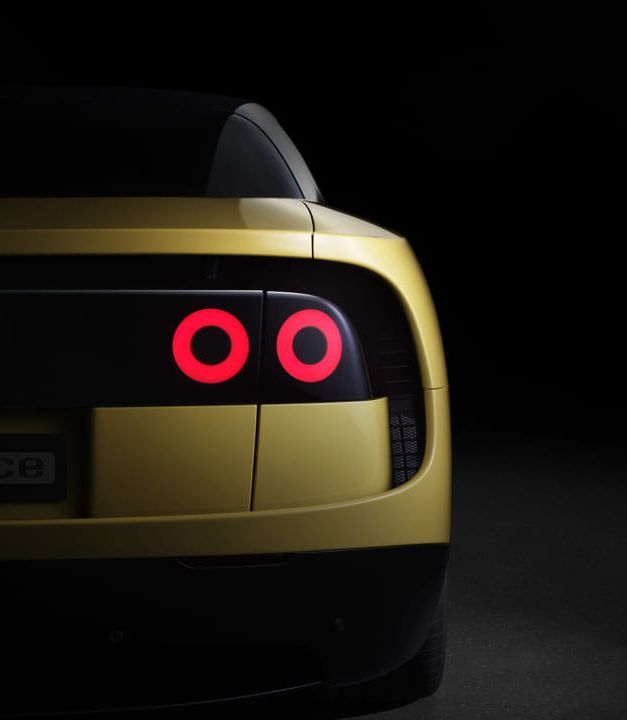
Not Made for Going to Work. Light and Shadows on the Ferrari Luce
A reflection on what we lose when reason erases desire
There are moments when the world holds its breath. Not because a product is revolutionary, but because an icon tips over. On May 26, 2026, Ferrari unveiled the Luce, its first fully electric car, with ceremony befitting Rome: a splashy world premiere at the Vela di Calatrava, a sports complex designed by architect Santiago Calatrava, conceived in 2005, abandoned for nearly two decades for lack of funds, and reopened at the last minute for the 2025 Jubilee of Youth. A venue with a singular trajectory, chosen to host a launch that some have judged, in their own way, equally controversial from the start. Hand-picked guests. Police escort. Phones sealed to prevent leaks.
The following morning, Ferrari‘s delegation, led by President John Elkann and CEO Benedetto Vigna, traveled to Castel Gandolfo to present the vehicle to Pope Leo XIV in person, offering him the steering wheel as a tribute. The pontiff inspected the Luce, settled into the driver’s seat, and asked whether this was “the first Ferrari with four doors.” It was not. Even the head of the Catholic Church needed a moment to understand what he was looking at.(1)
—The real fall, if fall there is, is not on the stock exchange. It touches something far deeper than balance sheets: the unwritten emotional contract that has always bound Ferrari to its communities.
The markets responded immediately: shares fell sharply, making Ferrari the worst performer on the Milan Stock Exchange that day. But the real fall, if fall there is, is not financial. It is symbolic. It touches something far deeper than balance sheets: it touches the unwritten emotional contract that has always bound Ferrari to its communities.
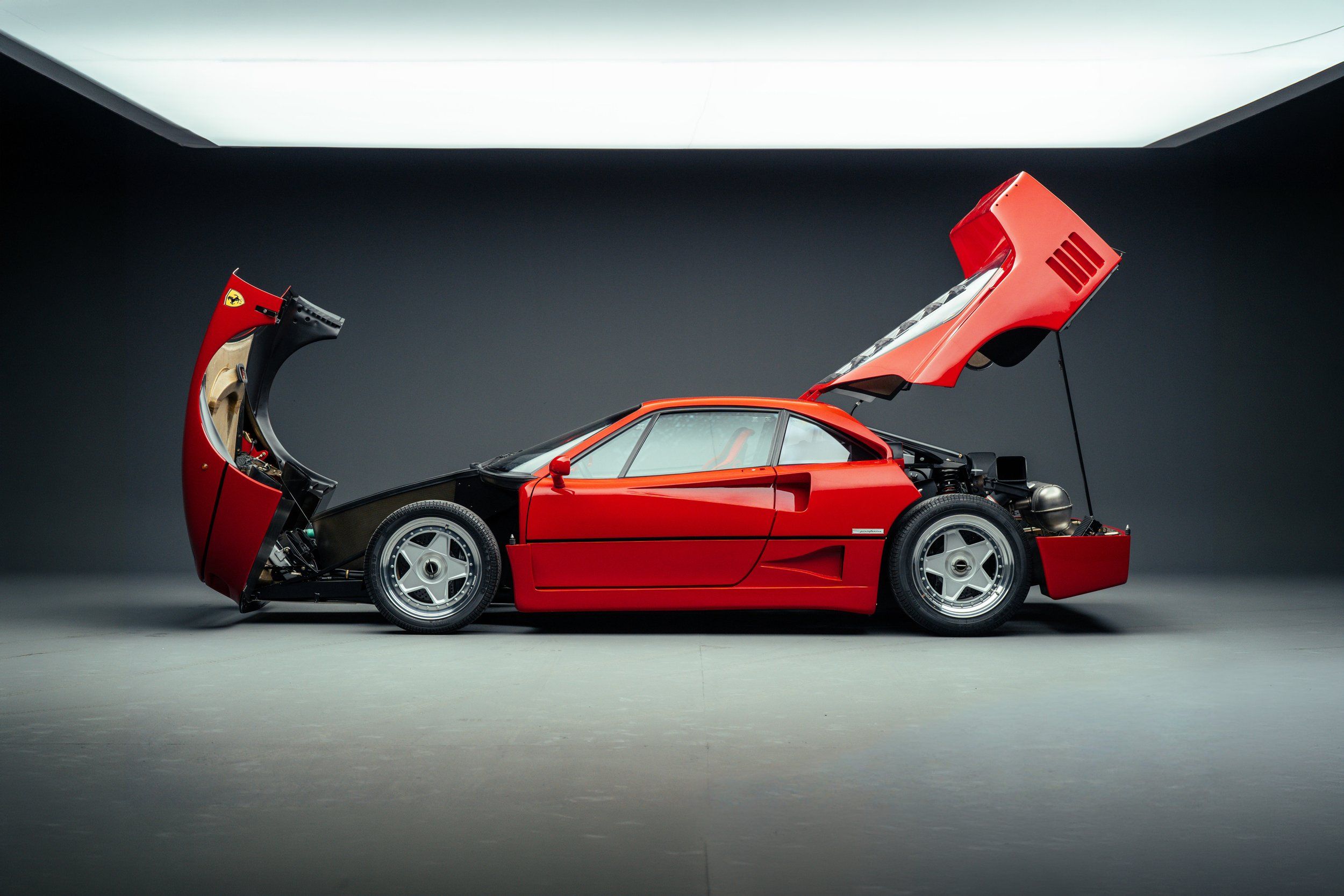
I. What Ferrari Has Always Delivered
Before analyzing what the Luce is, one must recall what Ferrari has delivered, at its best, and almost without exception. Pure blood. Machines born from a stable tradition where each model came into being the way one raises a purebred horse: for competition, certainly, but also for that beauty which needs no movement to assert itself, as evident at rest as at full gallop, as arresting in a silent garage as on a circuit at full charge.
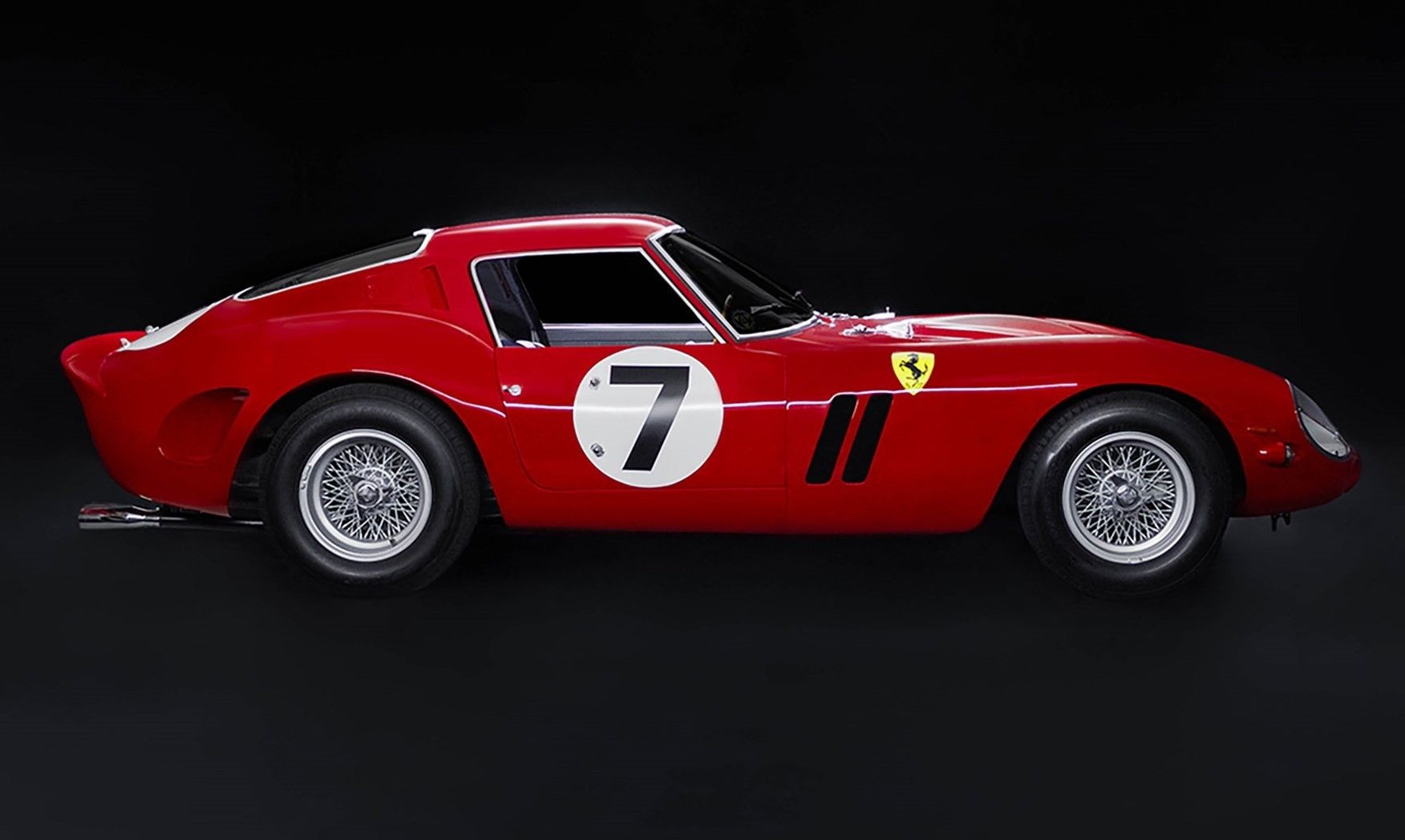
Fioravanti, designer of the F40 at Pininfarina, was unambiguous: “We got exactly the car we wanted, with little comfort and no compromise.”(2) The 250 GTO, the F40, the Testarossa: three eras, three temperaments, one single conviction. Controlled excess as aesthetic. Power as language. Form as manifesto.
A Ferrari does not justify its existence through functionality. It imposes it. Through the sound it emits before it is even seen. Through curves that overflow and seduce before they persuade. It is an object of desire in the anthropological sense: irrational, carnal, exclusive, and proudly so. Like Sophia Loren in Vittorio De Sica’s La Ciociara: a presence that does not seek to convince, that needs no introduction, and that one never forgets. A force of nature, simply there, whole, indisputable.
—Ferrari is not made for going to work. It is made for forgetting that one works.
Luca Cottini, professor of Italian studies at Villanova University and Harvard doctoral graduate, has theorized this power specific to the Italian cultural object around what he calls incanto, enchantment. Its three components: the creative force of constraint; design as storytelling through the speaking object, endowed with genealogy, vitalism, performativity, and coherence; and the chordality of interactions, where the fabbrica functions as community, the family as guarantor of continuity, the theater as space for emotional action.(3)
Ferrari is the archetype of this incanto. Its objects are speaking in the fullest sense: they carry a genealogy (Enzo Ferrari, Maranello, Emilia-Romagna, the Motor Valley), a vitalism (the engine as living organism), a performativity (the form that speaks speed before it produces it), a coherence (a DNA recognizable across seven decades). This is not a communications strategy. It is a conviction embodied in matter. And it is precisely what the Luce throws into tension.
II. The Strategic Choice: Rupture or Drift?
The decision to engage LoveFrom, the collective founded by Sir Jony Ive and Marc Newson, was made at the highest level, by Executive President John Elkann, long convinced that this collaboration was waiting for the right project to express itself.
The logic is understandable. Apple, with the iPhone, did not merely redefine an entire category: it opened the way for smartphones and imposed their functional and ergonomic syntax on the entire world, a language of screens, smooth surfaces, and intuitive gestures that billions of users have internalized as second nature. Design did not respond to an existing need. It created the need, then the reflex, then the norm. This is what design theorists call setting new rules: not satisfying market expectations, but displacing them, durably, universally. Ferrari, in choosing Ive, appears to want to perform the same disruptive gesture on the luxury electric car market. The Luce is not an off-the-shelf car: five years of work, more than 60 patents, a platform developed entirely in-house. A process that undoubtedly drew on the analyses of some of the world’s most capable specialist firms. Whatever data could say, it has surely been said. The problem lies elsewhere.
And yet. In a society where screens dominate our daily lives, where major technology platforms structure our gaze, our aesthetics, our sensory reflexes, it has become natural to hear, here and there, “I’m an Apple fan, I love the Luce.” But this spontaneous convergence of enthusiasms should perhaps alarm us rather than reassure us. Is it not the sign of an aesthetic flattening, a monopoly of forms, an impoverishment of visual language in favor of a single, global, interchangeable grammar? Ive and Newson are magnificent designers: that is not the question. The question may lie in the casting. Or in the brief. Or in a process too worked over, too negotiated, too anxious to simultaneously satisfy too many divergent desires and objectives. Who knows. But the result speaks for itself.

The comparison with Apple quickly reaches its limits, and that is where the strategic miscalculation lies.
Apple designs windows. Tools of transmission, devices conceived to exist discreetly in our daily lives: pleasant to the touch, technically powerful, simple in their comprehension and use. Their beauty is that of effacement: cold, perfect, reproducible. Apple is not a car for going to work: it is the traveling companion of those already on their way.
Ferrari is not made for going to work. It is made for forgetting that one works. Its identity is founded on sound, power, speed, unapologetic exaggeration, a near-baroque spirit, rarity, and that irrational, carnal thrill that no spec sheet can capture. Ive spent his career making complexity disappear behind elegance. Ferrari has always done precisely the opposite: exposing complexity, amplifying it, making it the spectacle. A complexity always subordinated to function and technical constraints, but finalized with an aesthetic mastery that transfigures it into desire. And one that engages the whole body: the ears listening before the eyes see, the hands feeling the resistance of the wheel, the lower back absorbing the road, all the senses summoned simultaneously.
Where Apple calls on intelligence, Ferrari calls on the body. The F40, an extreme case, offers the paradoxical proof: described by Ferrari at the time as “very fast, extremely sporty and spartan”(4), it nonetheless marked the imagination of the 1980s as few objects have managed to do. Absolute constraint, too, can give birth to an icon.
—The Italian baroque crushed beneath Anglo-Saxon pragmatism.
A Ferrari is not a window onto the world: it is a rupture with it. It does not connect, it isolates, it exacerbates, it concentrates experience on the whole body. Let us say it plainly: it is a selfish, trivial experience, claiming no social utility. And that is precisely why it is irreplaceable. Because its primary function is not to serve, it is to provoke an emotion. Pure, excessive, unjustifiable. Like all great passions. Its sole social act, and it is not a small one, is to offer others, freely, the sight and sound of these baroque and excessive objects that cross the world like shards of beauty, but also like the object of desire one will never possess. Simply there to be admired. Bello e impossibile, as Gianna Nannini once sang.
—It is a selfish, trivial experience, claiming no social utility. And that is precisely why it is irreplaceable.
“An electric Ferrari designed with LoveFrom was never going to be judged only as a car. It was going to be judged as a collision between two design religions.”(5)
These two religions do not merely contradict each other aesthetically. They rest on opposing philosophies of experience and desire. Importing the grammar of one into the territory of the other inevitably produces this sense of displacement: not a technical failure, but a displaced identity. The Italian baroque crushed beneath Anglo-Saxon pragmatism.
III. Form as Betrayal: Sensory Aesthetics as Brand Contract
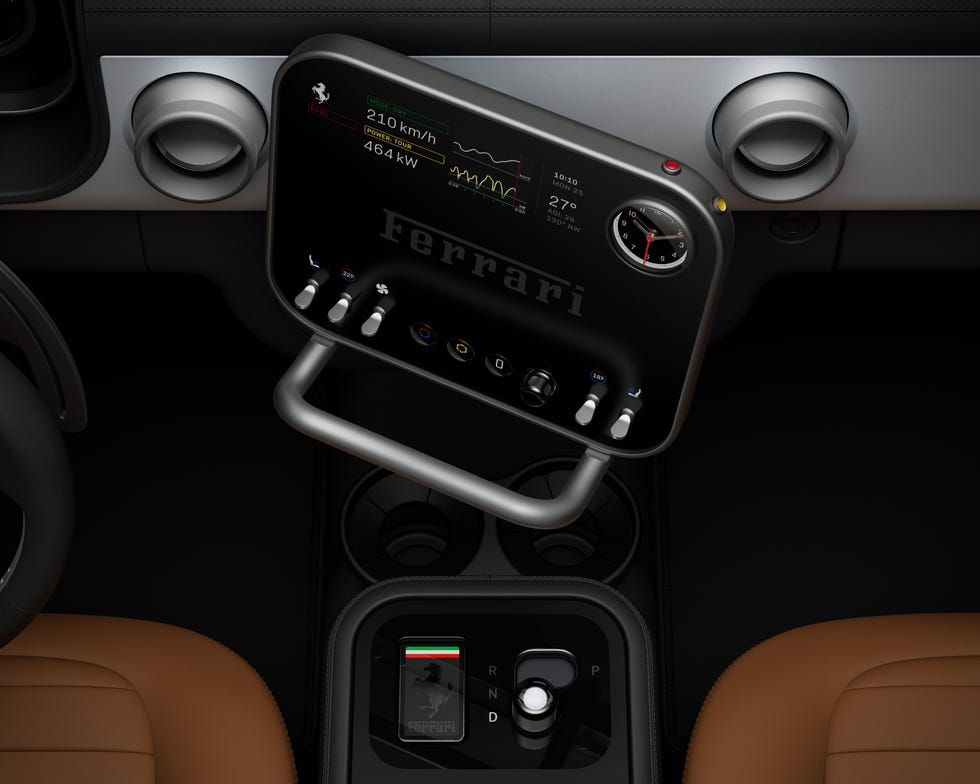
Freed from the constraints of a front mid-engine and rear gearbox, Ive and Newson capitalized on the electric architecture to create a vehicle defined by refined volumes: “a glass house, a continuous shell form extending to the absolute extremes of the bodywork, augmented by aerodynamic wings appearing to float around the volume.”(6) The interior follows the same logic: “simplified and rationalized forms in service of the driving experience, every element meticulously considered.”(7)
This is impeccable on its own terms. And that is precisely the problem.
In brand strategy and experience design, aesthetics is never neutral. It is not a veneer: it is a language that addresses the senses before it addresses the intellect. What is called sensory aesthetics, a brand’s capacity to build a coherent and distinctive multisensory experience, encompasses sound (often protected as a standalone brand asset in the sports car industry), touch, the weight of controls, the resistance of materials, the warmth or coldness of a surface. It is through this global sensory language that a brand renews, at each point of contact, what it has always delivered.
The sensuous, organic forms of historic Ferraris came from a tradition of artisanal coachbuilding: they were not conceived, they grew from within, the direct expression of a mechanical intention and a cultural temperament. Each curve, each surface, each sound participated in a coherent narrative that referred directly to founding values: power, Italianness, unapologetic baroque, controlled excess.
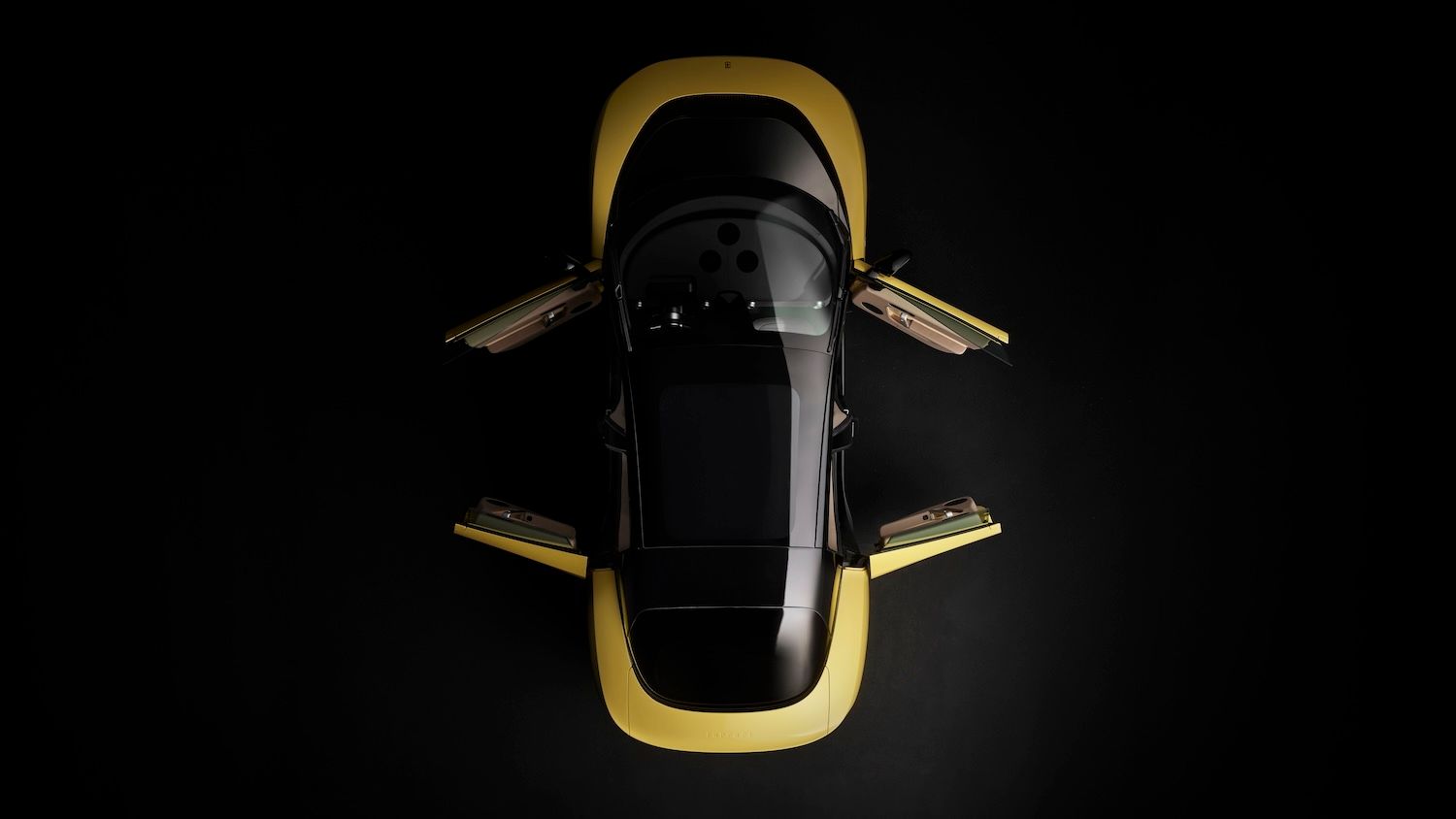
The Luce substitutes for that language the language of functional minimalism. Its continuous, clean volumes, its glass house, its refined interior speak of efficiency, contemporaneity, universality. These are real and defensible values, but they are not Ferrari’s values. And it is this semantic gap, between what the form says and what the brand has always embodied, that creates the unease, well beyond the media noise.
It is no coincidence that spontaneous criticism compared the five-seat egg-shaped silhouette to a Nissan Leaf. The comparison is technically unfair. But it says something true about perception: the absence of that surplus of form which says, before the engine even speaks, you know what elegance is, don’t you?
IV. Finance as an Aesthetic Factor: The Non-Place Hypothesis
One must ask a question that no one asks explicitly: who, in the end, validates these aesthetic choices?
Ferrari is a publicly listed company, controlled at approximately 36% by Exor, the Agnelli-Elkann family holding, and at 10% by the Ferrari family itself.(8) The float is in the hands of international markets: sovereign wealth funds, global asset managers, institutional investors from Singapore to New York. These actors value the brand’s capacity to address a global market, to reach new buyers, to position itself in a rapidly expanding electric luxury category. Their implicit aesthetic is that of universality: contemporary, without rough edges, without marked belonging.
It is an aesthetic that the geographer Marc Auge theorized under the concept of the non-place(9): those spaces of supermodernity, airports, business centers, international hotels, that resemble one another from city to city, continent to continent, precisely because they were designed to belong nowhere in particular. Their beauty is cold, functional, reassuring. They never challenge, never provoke, never belong to anyone. They welcome everyone because they speak to no one in particular.
The Luce, in its final form, presents something of this logic. Clean, contemporary, global, stateless: without its Ferrari badge, it could belong to any ambitious luxury brand. And that may be why some have called for its excommunication from the family. Ferrari has always been a place, charged, anchored, rooted in identity, Emilian down to its smallest details. A car that belongs somewhere, to someone, to a history.
LoveFrom may be interpreters too accomplished in this globalized design: a synthesis of Asian minimalism, Anglo-Saxon pragmatism, and a graphic clarity inherited from the International Style, effective where legibility is a constraint, less convincing where Ferrari has always spoken in excess. A new post-modernist norm detached from any vernacular reference. An object without flaws, and without territory.
The risk of aesthetic homogenization is not merely a risk of style: it is a risk of identity. And for a brand whose essential capital is immaterial, emotional, mythological, that may be the most serious risk of all.
V. The Emotional Contract: What the Community Expects
Luca Cordero di Montezemolo, who presided over Ferrari for more than two decades, delivered a painful verdict: “If I were to say what I really think, I would do Ferrari a disservice. We risk destroying a legend, and I am truly sorry.” He added: “I hope they at least remove the prancing horse from this car.”(10)
—We risk destroying a legend.
Flavio Briatore was more concise and equally cutting: “This electric car has one great advantage: the Chinese will certainly not copy this model.”(10)
These illustrious voices are only the visible tip of a wave of indignation that swept social media and the international press, revealing the depth of unease far beyond informed circles.
These reactions reveal something fundamental about the nature of the bond that unites Ferrari to its communities. That bond is not a consumer relationship. It is an emotional contract, a conviction renewed with each model, each race, each image. A Ferrari, even for someone who has never driven one, even for someone who will never buy one, is a projection of desire, freedom, embodied excellence. It belongs to its owner, but it also belongs, in some sense, to everyone who watches it pass.
Analysts note that the Purosangue provoked similar reactions before becoming one of the brand’s best-selling models, with demand exceeding supply. The argument is valid, but incomplete. The Purosangue had already, in its design, shown a certain anxiety dictated by commercial necessity, its formal vocabulary approaching that of competitors and more standardized industry models. Its sales are real, but at the cost of significant concessions to the market. The Luce goes further still in that direction: it proposes a Ferrari otherwise, with a formal grammar borrowed from another design culture, another geography of meaning. It is not the same rupture.
Cottini would remind us here that what is at stake is chordality(3): that polyphony of actors, places, and gestures which means that a great Italian brand never belongs entirely to its shareholders, but to the whole of its community of belonging. When this polyphony breaks down, when form no longer speaks the same language as collective memory, the unease that results is not irrational. It is proof that the brand truly exists, that it has taken root in bodies and imaginations.
The Rootless Object
A process led by very talented professionals, nourished by data and analysis, can nonetheless produce an object that misses what matters most. Not for lack of intention, nor for want of investment in energy, resources, or expertise. But because too many compromises, too many simultaneous desires to satisfy, and perhaps a loss of confidence in the strength of a family culture too quick to seek help from outside, end up diluting what cannot be delegated: the soul.
—Too many compromises, too many simultaneous desires to satisfy... end up diluting what cannot be delegated: the soul.
The light the Luce projects is cold, precise, LED. Where one expected fire, that sacred fire of roaring engines and generous, baroque forms that made Ferrari not a manufacturer but a myth, one finds a refined global reflection, rootless. An irreproachable object that disturbs no one, offends no one, belongs nowhere in particular.
At a moment when societies are asking only to reconnect with territory, with the authentic, with values of transmission and regeneration from the roots, Ferrari may have chosen exactly the wrong moment to turn away from them. Edgar Morin, sociologist and philosopher of complexity, spiritual father of several generations of thinkers, who passed away just two days ago at the age of 104, wrote: “We must reject cosmopolitanism without roots, which is abstract, in favor of earthly cosmopolitanism.”(11) I offer him here a modest tribute, invoking his thought where it best illuminates what we risk losing: the bond between an object, a territory, and the soul of a people that recognizes itself within it.
—Ferrari is earthly. Emilian, familial, vocal, excessive. It belongs to a soil, a culture, a history of the engine that is also a history of Italy.
Ferrari is earthly. Ferrari is Emilian, familial, vocal, excessive. It belongs to a soil, a culture, a history of the engine that is also a history of Italy. In seeking to please a globalized world, it risks losing what that world, precisely, envied it: its rootedness, its character, its refusal of compromise. The passion is still there. The faithful are many, and they are waiting. But passion, like love, must be seduced again and again to endure.
→ Read more Nask Studio insights here→ See more Projects
NOTES
(1) Remarks attributed to Pope Leo XIV, reported during the presentation of the Ferrari Luce at Castel Gandolfo, May 27, 2026. Multiple international press sources.
(2) Leonardo Fioravanti, designer of the Ferrari F40 at Pininfarina. Quoted in Autoevolution, Visionary Ferrari Engineer Nicola Materazzi Talks About the F40 Project, 2018.
(3) Luca Cottini, The Art of Objects: The Birth of Italian Industrial Culture, 1878-1928, University of Toronto Press, 2018. Keynote address for the Canadian Association of Italian Studies. The term chordality designates the distinctively Italian manner of constructing collective value through a network of interactions among different actors who, like the voices of a musical chord, play together to produce something greater than each taken separately.
(4) Ferrari marketing department, quoted in Engineering: Ferrari F40, HandWiki. https://handwiki.org/wiki/Engineering:Ferrari_F40
(5) “An electric Ferrari designed with LoveFrom was never going to be judged only as a car. It was going to be judged as a collision between two design religions.” AppleMagazine, Ferrari Luce CarPlay Question Adds to Jony Ive Debate, May 2026. https://applemagazine.com/ferrari-luce-carplay/
(6) (7) Descriptions of the Ferrari Luce drawn from official Ferrari communications and international specialist press, May 2026.
(8) Ferrari N.V. shareholder structure as of December 31, 2025: Exor N.V. (Agnelli-Elkann family) approximately 36%, Piero Ferrari Trust approximately 10%, free float on NYSE and Euronext Milan. Source: Ferrari N.V., Shareholders’ Structure, ferrari.com, February 2026.
(9) Marc Auge, Non-Places: Introduction to an Anthropology of Supermodernity, Seuil, 1992.
(10) Luca Cordero di Montezemolo and Flavio Briatore, public statements following the launch of the Ferrari Luce, May 2026. Multiple Italian and international press sources.
(11) Edgar Morin, Ma Gauche, Editions Bourin, 2010, p. 195. Edgar Morin died on May 29, 2026, in Paris, at the age of 104.