Loading
Nask
Loading
The Room Where Ideas Happen: Collective Intelligence as Creative Practice
From Istanbul to New York, from Geneva to Marbella, over two decades of workshops, focus groups, and facilitated creative processes — a reflection on collective intelligence.
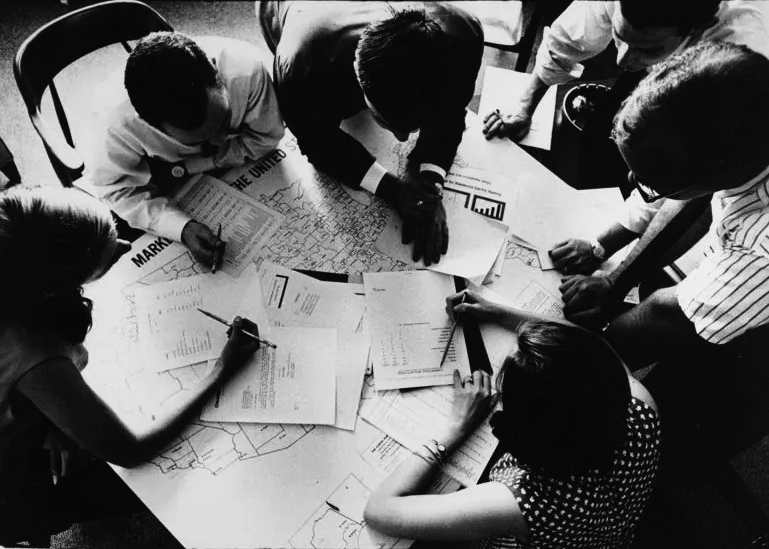
There is a moment that happens in every workshop. Somewhere between the second and third hour, someone says something unexpected. Not necessarily brilliant, not yet. But unexpected. Eyes light up. People want to speak. Conversations that were cautious become direct. This is when collective intelligence becomes visible, not as a theory, but as something almost physical.I have been working toward that moment for over twenty years. Through workshops, focus groups, and expert panel facilitation. Through interviews with CEOs and general managers in preparation for complex collective processes. For organizations as different as Reuters and Swisscom, Volkswagen and the State of Geneva, DuPont and Swatch, the Daily Mail and Orange, and most recently the faculty of Les Roches Global Hospitality Education, across contexts as varied as Istanbul, New York, Zurich, Geneva, and Marbella.Collective creative facilitation is one of the deepest competencies Nask Studio has built over two decades. It is not our only one. The studio works across the full spectrum of creative and strategic practice. But the capacity to engineer conditions in which a group produces something that none of its members could have produced alone is a discipline we have practiced long enough to understand in its full complexity.
A Practice Hiding in Plain Sight
The underlying logic of collective intelligence has not changed across centuries: a group of people, given the right conditions, can generate something no individual within it could have produced alone. This is documented across cognitive science, organizational psychology, and decades of field practice.And yet its potential remains consistently underestimated. The carefully designed, expertly facilitated collective process tends to be treated as optional, something to schedule when there is time and budget, or worse, perceived as a moment of fun rather than a core instrument of strategic thinking and organizational transformation.
—Collective intelligence is not a modern invention. It is an ancient practice we have forgotten to take seriously.
When well managed, collective intelligence processes have a genuinely regenerative power. They reactivate systemic thinking within organizations that have become siloed. They restore a culture of creativity that routine and pressure erode. They open the conditions for deep transformation, not as a one-time event, but as a renewed organizational capacity.
Two Modes, One Studio
Much of what Nask Studio does is individual creative direction: a client brings a brief, we develop a proposition and present it seeking validation and adoption. When a brand needs to take a strong creative position, when the market demands transformation rather than consensus, individual creative direction becomes necessary. It is intrinsically more exposed, passing through a series of external validations. But that exposure is sometimes precisely what is needed.This is the territory explored in our article on Art-Based Thinking, which describes a creative process rooted in artistic intuition, essentially the opposite of collective intelligence. (read the article here)Collective creative processes operate differently. Here, generation and adoption happen simultaneously, within the same room, among the same people. Participants are not only generators of ideas. They are also the primary source of information, bringing first-hand experience directly into the process, confronted and enriched in real time against the perspectives of others. Together the group generates, elaborates, selects, and adopts. There is no gap between creators and recipients, no risk of clanic positions hardening in isolation.This immediacy accelerates complex decision phases, reduces entrenched positions, anticipates conflicts before they formalize, and builds over time a culture of genuine collaboration. What collective creative work adds is not necessarily better ideas in the abstract. It is adhesion, shared effort, and the social fabric that no individually produced deliverable can create on its own. Participants leave not just with outputs, but with the experience of having been part of something, of having built something together that none of them could have reached alone.These two modes are not in competition. They respond to different needs and different moments. Our role is to bring the right approach to the right problem.
Twenty Years in the Field
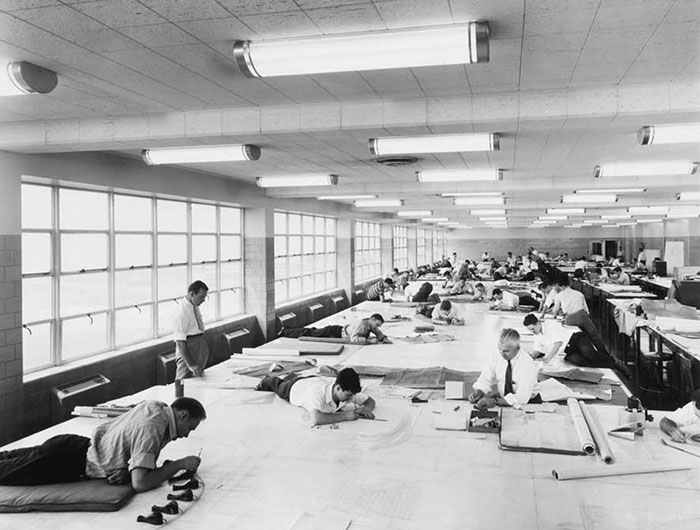
Over two decades, we have had the privilege of practicing collective creative processes across a remarkable range of contexts. Each experience has taught us something different about what makes these processes work, and what prevents them from doing so.Our long-term voluntary involvement in associative and non-profit environments has given us a close view of both their creative potential and their structural limitations. These sectors experiment with collective processes earlier and more openly than the corporate world, and often with genuine enthusiasm. But without a clear goal-setting authority and a structured engineering, sessions can drift into inconclusive exchanges. The intention is real. The framework is missing.One complex project that remains particularly instructive was the creative direction of an urban wayfinding system for the Léman Express, long known locally as “the project of the century”: a cross-border metropolitan rail network connecting the Swiss and French railway systems across greater Geneva, accompanied by a vast urban development program. The challenge was institutional, political, financial, and technical simultaneously, with actors who had rarely sat around the same table: the Canton of Geneva, the City of Geneva, surrounding municipalities, cross-border French communes, citizens’ associations, and organizations representing people with reduced mobility. Jan, Claude, and Ulysse were essential companions throughout nearly three years of work, navigating a landscape of extraordinary complexity with patience and commitment.The collective process produced rigorous, expert-validated work. Whether its outcomes were ultimately implemented in the form the process had shaped is a different story, one that speaks to something we encounter regularly: the gap that can exist between a shared creative vision, the resources available, and the practical constraints of implementation. Bridging that gap requires alignment at every level of an organization. A lesson we carry forward.Both the associative context and the institutional complexity of the Geneva project illustrate, from different angles, the same fundamental truth: collective intelligence processes are only as powerful as the organizational commitment that surrounds them. Which brings us to the conditions that make them work.
Right Conditions, Real Outcomes
Every activity in a collective creative process, whether a brainstorming phase, an individual reflection exercise, a group selection protocol, or a voting moment, has a specific function and must be treated as such. Placed at the wrong moment, poorly moderated, or introduced without the right conditions of trust, any tool can produce the opposite of what is intended. A brainstorming phase arriving too early will be dominated by the loudest voices. A convergence exercise imposed before divergence is exhausted will produce false consensus.Designing a collective creative process is closer to constructing a narrative arc than to assembling a toolkit. Each phase prepares the conditions for the next, much like building a house: foundations before walls, walls before roof. The facilitator’s expertise lies precisely in this engineering.
—A workshop without structure is just a conversation. Structure is what transforms a room full of people into a thinking collective.
These processes are also moments of genuine human exchange. The simple fact of listening to one another, of being heard, of building something together, is already a benefit in itself. The cohesion that emerges is not a side effect. It is part of what makes the process valuable. The mistake is in designing a session exclusively around this human dimension, at the expense of the strategic ambition that gives the process its full meaning. In a well-engineered workshop, the two reinforce each other.A related pattern worth naming, particularly visible in the public sector, is the alibi consultation process. Collective sessions can be organized not to genuinely generate intelligence, but to create the appearance of participation and pre-empt resistance to projects already decided. Urban development projects and political reforms are familiar examples. The reasons are not always cynical: public decision-making operates within genuine constraints of democratic timeframes, public budget accountability, and the pressure of investors who cannot indefinitely absorb uncertainty. Participants sense the situation quickly, and the process loses its credibility along with any chance of generating genuine alignment.The effectiveness of these processes ultimately depends on a set of non-negotiable conditions: the sincere will and genuine commitment of executive decision-makers, visible to everyone in the room; a clear goal defined upstream; an engineering tailored to a specific brief, never borrowed from a generic template; mastered facilitation capable of managing the full complexity of human dynamics in real time; a recognized institutional authority present in the room; and a rigorous consolidation phase that translates outputs into actionable propositions within a realistic timeframe. A workshop that produces rich material but no structured follow-through leaves its participants with energy and no direction.
Engineering the Experience
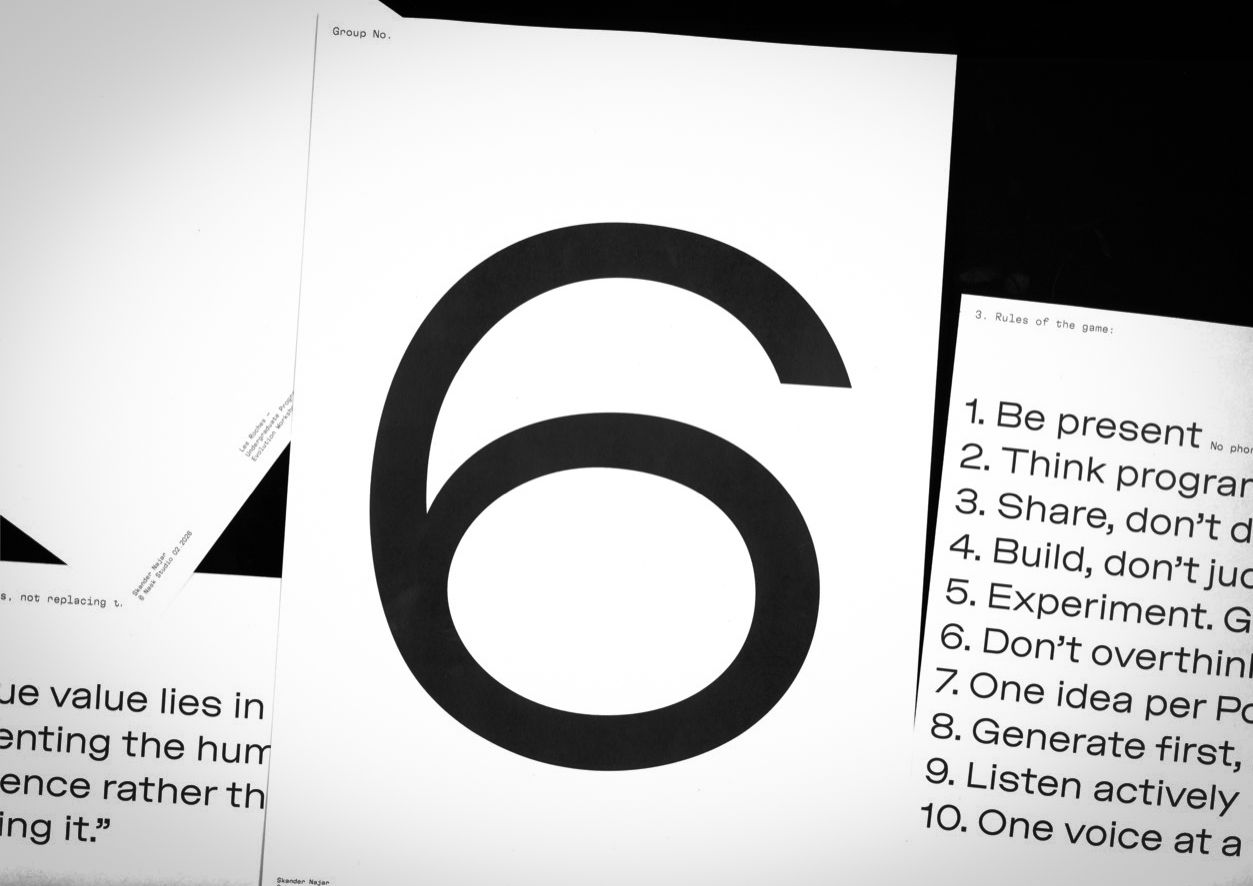
A workshop is not a meeting with exercises. It is an engineered experience: a carefully sequenced architecture of phases, each designed to activate a specific dimension of collective intelligence.Before a session begins, significant preparation happens out of sight. Interviews with CEOs, general managers, and key stakeholders provide the contextual intelligence that makes a truly tailored process possible. Understanding internal dynamics, real tensions, and unspoken objectives before entering the room is what separates a workshop that produces genuine outcomes from one that produces a polished report.In our workshops, every element of the frame is a design decision. Phones and laptops are banned. Screens are not only a distraction; they are a protective shield, a way of staying partially absent, blocking human interaction and closing off the channels through which engagement, emotional expression, and the emergence of ideas become possible. A casual dress code reinforces this: it brings people closer, levels the visible markers of hierarchy, and creates the relaxed atmosphere in which ideas emerge more freely.Comfort is not incidental to creativity. It is one of its conditions, and managing it is part of the facilitator’s responsibility. The quality and timing of breaks and meals are design decisions like any other. Physical well-being, energy levels, the simple fact of not being hungry or exhausted, these are not details. They are foundations. I learned this in a particularly memorable way in New York, during a workshop in the Meatpacking District that I was facilitating alongside Mattia. A catering van had gone astray somewhere in the streets, and what followed came close to derailing the entire session. A reminder that however carefully the intellectual and creative architecture of a workshop is designed, the human body has its own requirements and ignoring them is never without consequence.Participants move, work standing, split into groups, use walls and surfaces as thinking tools.
The Art of Facilitation
If engineering is the rational architecture of the process, facilitation is its human counterpart. And the two demand entirely different competencies.Facilitation, at its best, can be almost invisible. When the process flows, the facilitator steps back. When friction appears, whether a dominant voice, a blocked dynamic, or a moment losing direction, the facilitator intervenes with precision: redirecting the group, reframing a question, or taking someone aside individually.But the deeper challenge is often the opposite: the silence of those who do not yet feel safe enough to speak. Speaking out in a group is, for many people, simply uncomfortable, independent of hierarchy or organizational culture. Creating a genuine safety space is one of the facilitator’s most critical responsibilities, and it cannot be achieved alone. It requires the active support of the institutional representative, whose authority and behavior signal to the group that honest expression is not only welcome but protected. Central to this space is the principle of non-judgment: ideas are shared, built upon, and selected, never criticized or dismissed. That permission, coming from within the organization itself, is what unlocks the room.Timing is a discipline in itself: knowing when an exercise has given everything it can, and when it needs more time to reach its full depth. Respecting the clock mechanically is not facilitation. Knowing when to override it is.
—The best facilitation is the kind nobody notices. Until the moment it becomes essential.
Once you walk into the room, rational mastery and emotional intelligence must operate together, reading the space, sensing the undercurrents, responding to what is alive in the moment. The score is written. But it is the conductor‘s empathy, intuition, and presence that makes the orchestra play with harmony, tempo, and feeling.The ultimate skill, the true grail of facilitation, is the capacity to build individual trust with each participant, one by one, through direct and personal connection, making each person feel genuinely seen and valued. When that connection exists, participants contribute fully and openly. When it is absent, individuals retreat into defensive positions that, left unaddressed, spread through the group and quietly undermine the entire process. No methodology compensates for this. It is the most human, and the most decisive, dimension of the facilitator’s work.Facilitation works best when supported by the right people. An assistant is essential for data collection and organizational logistics. But the most critical figure is the institutional representative, someone who brings domain expertise, representative authority, personal relationships with participants, and strategic clarity about what the process is ultimately meant to achieve. Their involvement from preparation through to final consolidation is what transforms a workshop into a genuine instrument of organizational change.
Trust the Process
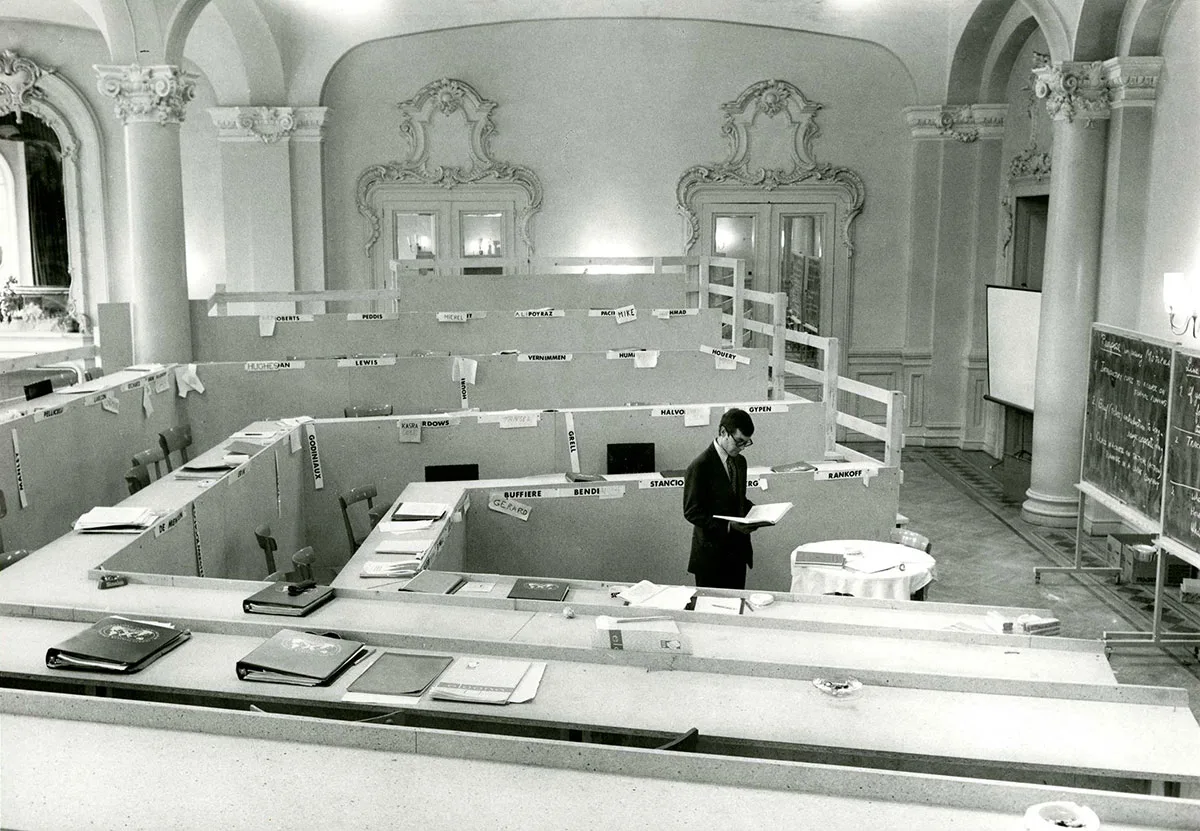
Ivana Nobilo, Dean of Les Roches*, exemplified the role of the institutional partner at its best: deep technical expertise on the subjects being addressed, representative authority, personal relationships with every participant in the room, a remarkable capacity for creating the right safety conditions, and strategic clarity about what these sessions were meant to produce. Her involvement was fundamental at every stage, from the initial design of the workshops through to the final consolidation of outputs.Throughout the sessions in Marbella, she repeated it like a mantra as she watched her colleagues carried by the wave of collective intelligence building in the room: trust the process.It is a call for patience. A reminder not to anticipate outcomes the moment they begin to emerge, not to rush toward conclusions, not to close doors before the room has had time to find its own way. In facilitation, the temptation is real: to steer, to summarize, to wrap things up when the energy seems right. But some of the most valuable moments arrive precisely when you resist that temptation. When you leave space for doubt, for confusion, for the unexpected detour that turns out to be the most direct route.
—The most valuable moments in a workshop are rarely the ones you planned for.
Trusting the process means staying open to pure intuition and to the opportunities that no agenda could have anticipated. In Marbella, a young woman named Rosana was present in a supporting role. While working with her between sessions, something clicked. The workshop already featured written Gen Z profiling as reference material. But here, in the room, was an actual Gen Z voice. We gave her a prominent role on the spot. Participants who had been engaging with abstractions about their students could suddenly address a real representative of the generation they were trying to reach. The Q&A that followed was one of the most valuable exchanges of the entire series. Unplanned, unrepeatable, and only possible because the process was open enough to welcome it.
Collective Intelligence in the Age of AI
In 2026, any reflection on collective creative intelligence has to address artificial intelligence.AI tools have significantly changed the texture of creative work. They accelerate the generation of material, make research faster, facilitate structuring, and enable rapid prototyping of concepts that previously required weeks. For both individual and collective creative work, they are undoubtedly useful accelerators.But, on an additional layer already driven by the general digitalisation of our society, they also carry risks that are rarely named. They extend the temptation of working alone, in silos, under the illusion that a machine can replace the friction and richness of human exchange. They place us in front of endlessly accommodating interlocutors, which gradually erodes our capacity for genuine debate, negotiation, and the patient work of building consensus with people who see the world differently. They diminish our exposure to divergent experiences and perspectives, and with it, our capacity for empathy toward difference.Most importantly, they risk detaching us from something that is both essential and extraordinary: the energy that emerges when a group of people align around a shared objective, feel and think together with full physical, cognitive, and emotional presence, and produce something that none of them could have imagined alone. The generative capacity of a well-facilitated group is a function of the productive collision of different perspectives and blind spots; of the richness of interpersonal dialogue, of verbal and non-verbal exchange, of being truly listened to and understood by another person; and of shared commitment that no generated output can replicate. That energy is not replicable. It is not optimizable. It is one of the most powerful forces available to any group of people. And it requires other human beings to exist.
Finding Our Place Together
After twenty years of moderating collective intelligence, what stays with me most is not methodological. It is human.The world of work is often a demanding and isolating place. We perform our expertise. We defend our positions. We spend our professional lives alongside colleagues we rarely truly know.A well-designed workshop changes this, at least temporarily. It creates a space where titles matter less than values, where a moment of personal sharing opens something that months of professional interaction had kept closed, where the assistant who came to take notes becomes the most important voice in the room. It also creates, deliberately, a space of permission: to go further than reason alone would allow, to say the unexpected, to be a little crazy. Creativity requires freedom, and freedom from judgment is one of the rarest and most precious conditions a facilitator can create. When participants feel genuinely free to express, to experiment, to surprise themselves, something shifts. They become not just more productive, but more alive. They leave not just with ideas, but with a sense of pride, of having contributed to something larger than themselves, something impactful and full of purpose.At the close of every process, sometimes after two intense days together, strangers at the start and genuinely connected by the end, there is a moment that never loses its intensity. The emotion in the room is palpable. People thank us for something they cannot always articulate precisely. That, for us, is the most telling sign of what collective intelligence can produce, and the most honest measure of the transformation it brings to the people and organizations we work with.
—At the end of a good workshop, people don’t just leave with ideas. They leave different.
In a world where powerful forces increasingly convince us that technology will solve all issues, there remains a territory that no machine can colonize: the territory of collective human energy. The restoration of shared values, the reconnection to what gives us meaning, the recognition of others and of our own reason for being are not problems that technology, alone, solves. They are conditions that require a human physical and spiritual presence. That is the deeper promise of collective intelligence. Not just better decisions or faster alignment, but the experience of generating something together, beyond ourselves.That is what these rooms are for. And knowing how to design them well is a discipline we have been building, one session at a time, for over twenty years.
Nask Studio has been designing and facilitating collective creative processes, workshops, focus groups, and expert panels, for international organizations and institutions since the early 2000s, from Volkswagen in Istanbul to Reuters in New York, from DuPont and the State of Geneva to the faculty of Les Roches Global Hospitality Education across Switzerland and Spain. From strategic innovation workshops to the creative direction of complex multi-stakeholder projects spanning years, the studio brings over two decades of cross-cultural expertise to the art of thinking together.* Ranked second worldwide for Hospitality and Leisure Management, QS World University Rankings 2025.→ Read more Nask Studio insights here→ See more Projects→ Contact us for a workshop : ask@nask.cc